Thursday, April 10, 2008
what is Animated Director?
I took a personality test and the test result shows that i am an "Animated Director". Quite an interesting test. If you guys are interested, can go and try it. So what made an animated director? The details are being listed here


Sunday, April 6, 2008
Dolphin massacre in Japan
Dear Friends,
I have just read and signed the online petition:
"Stop the dolphin and whale killings in Taiji"
hosted on the web by PetitionOnline.com, the free online petition
service, at:
http://www.PetitionOnline.com/golfinho/
Video
I personally agree with what this petition says, and I think you might agree, too. If you can spare a moment, please take a look, and consider signing yourself.
I have just read and signed the online petition:
"Stop the dolphin and whale killings in Taiji"
hosted on the web by PetitionOnline.com, the free online petition
service, at:
http://www.PetitionOnline.com/golfinho/
Video
I personally agree with what this petition says, and I think you might agree, too. If you can spare a moment, please take a look, and consider signing yourself.
Thursday, March 27, 2008
Chinese Manufacturers' Worries on Inflation
1. Introduction
Since the opening up to the outside world in 1978, China has been very successful in positioning itself as the “world factory” exporting Chinese-made products to all parts of the world. In 2004, China overtook Japan to be the third largest exporter just behind Germany and United States (U.S.). At the pace it is growing, it is not impossible for China to overtake Germany and U.S. to be the largest exporter in the near future. However, overheated China is currently facing inflation problems. The Chinese manufacturing is the key sector affected by the inflation.
China economy is highly dependant on its export. In 2007, China’s export contributed 36% of its gross domestic product (GDP). Most of the Chinese-made products are exported to the developed economies.
Attributing to its success of export model, China economy is overheated. Inflation has been the core problem of the china economy. The phenomenon is clearly observable in the beginning of the year 2008. Besides the massive economic damages, the recent snow storm has caused a surge of food price in Feb 2008. Accompanied by the rising oil price, the inflation rate has gone as high as 8.7% in Feb 2008. Clearly, the high inflation increases the cost of raw materials affecting the business operation of the Chinese manufacturers.
In short, the short term outlook of China’s manufacturing sector has become uncertain. In this paper, we would want to explore the possible impact of inflation on the Chinese manufacturers.
2. Manufacturing Sector: Labor-intensive Products and Trade-induced Investment
Prior the economic reform in 1978, China has been facing a series of political and economic instabilities. Economic progress was slow and trade occurred mostly with the Soviet Union, a communist-ruled country.
As one of the world’s most populous country, China has the comparative advantage of supplying cheap labor to the global economy. Ever since the opening up, China has attracted many foreign companies to set up manufacturing plants producing labor-intensive products such as textile and steel. The investments usually come from overseas. In the year 2003, the total foreign direct investment (FDI) has hit US$53B in which Hong Kong, U.S. and Taiwan made up the majority of the investment.
In 2003 and 2004, manufacturing accounts about 70% of FDI inflows. (Barry, 2007) Yangtze River and Pearl River Delta, the core of the Chinese manufacturing sector, are the key investment hotspots. The development of the manufacturing sector has helped to curb unemployment especially in the Yangtze River and Pearl River Delta areas. Based on the official data in 2002, the manufacturing sector comprised about 15% of the whole labor force.
3. China’s Production Model
China’s trade has increased tremendously ever since the opening to the world economy. China’s trade surplus has soared to US$262B in the year 2007. This trade pattern is most prominent as exports starts to outpace imports after China’s entry to World Trade Organization in the year 2001.
China’s only comparative advantage over the rest of the world is the abundant of cheap labor. However, it lacks the skill and capital of developing technology-intensive products. Over-reliance on labor-intensive products is not going to be sustainable and hence, China has to resolve in “importing technology and skills” from developed economies such as U.S and Japan in order to stay ahead in the competitive global market. Results of this “Large In, Large Out” (大进, 大出) have been rewarding as exhibited by a high surge of both exports and imports in the recent years.

Red – Imports, Blue - Exports
Source: International Financial Statistic, 2008
China’s production model has started to diversify to technology-intensive products which involved more complex manufacturing processes. In the recent years, many foreign technology firms started to outsource some production to China producing semi-finished or final products. This trend is more observable in the electronic sectors. Well-know foreign brands such as General Electric(stock quote: GE), Apple(stock quote: AAPL) and Philips (stock quote: PHG)have their products (or components of their products) assembled (or manufactured) in China. In the year 2007, China accounts as high as 15% of the total trade in the world’s electronic sectors.
Based on the figures in the year 2002, semi-finished products comprised as high as 63.3 per cent of the total imports. These (semi-finished) products were processed in China and exported (as a final product) to the rest of the world (final product accounts 60% of the total export). The same production model applies for China’s export of semi-finished products. This is called trade processing.
Trade processing is a global trend. Intuitively, this global trade pattern strikes a “more-balanced” term of trades between China and developed economies as trade flow is not longer a single direction from China to developed economies.
4. China’s Present Inflation
Rising Oil Price
“Large In, Large Out” model has made China an important part of the world’s supply chain. However, it has also made China economy vulnerable to external factors. The more prominent factor which is affecting the whole world is the soaring oil price.
Oil is the raw material of all productions. As the “factory of the world”, China has to depend on imported oil for energy and production. The purchase of relatively expensive oil abroad has certainly “imported” inflation to its economy. In February 2008, the crude oil prices in China soared 37.5 per cent, up from 29.9 per cent the previous month, while coal prices were up 19.4 per cent year-on-year (YoY), up from 14.9 per cent in January.
Snow Storm
The snow storm during January and February 2008 was the worst snow storm that China encountered for the past 50 years. Transportation and power supply have been disrupted causing an economic loss of US$15B. More importantly, the shortage of agriculture output caused by the snow storm has surged the price of food in the country. The rising food price has been the main contributor of the recent inflation hike of China.
Currency Devaluation
China has been undergoing a cycle of hyperinflation (pre-1998) and deflation (post-1998); this is mainly due to the poor implementation of monetary policies in the earlier stage of economic reform resulting the devaluation of Reminbi. (RMB) Although deflation has put to a stop in the recent years, side effects of the poor monetary management (inflation) still present at the present era.
5. Chinese Manufacturers Face Inflation and Rising Wages
Chinese manufacturers are the main driver of the economy. Despite the high economic growth that China enjoyed, processing trade still dominated by the foreign trade. In 2006, exports comprised only 53 per cent of total trade i.e. the surplus between export and import was very small.
Soaring oil price has certainly rises the cost of raw material, transportation and energy. The inflated cost is going to further squeeze Chinese manufacturers’ profit which is already very small. The rising cost issue is further worsened when workers demand for higher wages to meet the needs of rising food price. In Guangdong, Chinese manufacturers were forced to raise wages by 18% in order to resolve the labor riot. (Marketwatch, 2008)
Certainly, inflation has affected the profitability of the Chinese manufacturers. In a logical sense, Chinese manufacturers will have to push some cost to the consumers in order to stay profitable. As China is “tightly tied” to the world’s supply chain, a price rise of Chinese export will certainly spark the next wave of global inflation.
However, manufacturing sector is highly competitive. Products such as electronic components or assembled products, for instance, are highly substitutable. Hence, raising the price may not be the viable option for manufacturers to compete in the market. There are signs that China’s manufacturing growth is slowing. CLSA Asia Pacific Markets reported that China’s seasonally-adjusted Purchasing Manager Index (PMI) has fallen to 52.8 from 53.2 in January and February 2008. A reading above 50 indicates growth. (CLSA, 2008)
Manufacturers are challenged from both supply- and demand-side factors – inflation and price competition. Less efficient manufacturers will be driven out of the game whereas more efficient one may resolve in labor retrenchment to cut cost. Both will only lead to one outcome – unemployment.
6. Contractionary Policy
Clearly, China, which relies on imports for production inputs, has to strengthen RMB currency to lower the cost of imports. During the press conference of the 11th Nation People’s Party Congress held on 18th March 2008, Chinese Premier Wen Jiao Bao has declared that inflation is at the top of the agenda in formulating economic policies. (Chinadaily, 2008)
The People’s Bank of China (PBC), the Central Bank of China, has increased the required bank reserve ratio (RRR) to as high as 15.5%, starting from 25 March 2008 to cool the economy. This is the twelve time ever since 2007 that PBC increases the RRR. Besides the increase of RRR, PBC has sold 130B RMB worth of government bills through open-market operation to soak up excess liquidity in the market.
The contractionary policies have been effective. Chinese RMB has appreciated to 7.025 RMB against U.S. dollar, a 3.7 per cent gained in the beginning of the year 2008 and it is not unlikely that 1 U.S dollar will be traded less than 7RMB in the later part of 2008.
7. Conclusion
Inflation has increased the cost of production to the manufacturers squeezing their profit margin. If inflation continues to rise, manufactures may layoff workers creating unemployment in the economy i.e. stagflation may occur. Despite the market’s sentiment that China’s export will be affected due to the weaker demand in the U.S. economy, PBC has prioritized their stand to curb country’s inflation through its aggressive monetary policies.
Indeed, PBC’s objective of appreciating RMB does help to lower the cost of imports to a certain extent. With U.S. Fed continue to pursue expansionary policies, U.S. dollar (the international currency) continues to devalue. The combined efforts of both China’s PBC and U.S. Fed will only make Chinese products even more expensive. This will still lead to global inflation. China, which now has economic power to influence the world price, should take this into account when formulating their economic policies.
Since the opening up to the outside world in 1978, China has been very successful in positioning itself as the “world factory” exporting Chinese-made products to all parts of the world. In 2004, China overtook Japan to be the third largest exporter just behind Germany and United States (U.S.). At the pace it is growing, it is not impossible for China to overtake Germany and U.S. to be the largest exporter in the near future. However, overheated China is currently facing inflation problems. The Chinese manufacturing is the key sector affected by the inflation.
China economy is highly dependant on its export. In 2007, China’s export contributed 36% of its gross domestic product (GDP). Most of the Chinese-made products are exported to the developed economies.
Attributing to its success of export model, China economy is overheated. Inflation has been the core problem of the china economy. The phenomenon is clearly observable in the beginning of the year 2008. Besides the massive economic damages, the recent snow storm has caused a surge of food price in Feb 2008. Accompanied by the rising oil price, the inflation rate has gone as high as 8.7% in Feb 2008. Clearly, the high inflation increases the cost of raw materials affecting the business operation of the Chinese manufacturers.
In short, the short term outlook of China’s manufacturing sector has become uncertain. In this paper, we would want to explore the possible impact of inflation on the Chinese manufacturers.
2. Manufacturing Sector: Labor-intensive Products and Trade-induced Investment
Prior the economic reform in 1978, China has been facing a series of political and economic instabilities. Economic progress was slow and trade occurred mostly with the Soviet Union, a communist-ruled country.
As one of the world’s most populous country, China has the comparative advantage of supplying cheap labor to the global economy. Ever since the opening up, China has attracted many foreign companies to set up manufacturing plants producing labor-intensive products such as textile and steel. The investments usually come from overseas. In the year 2003, the total foreign direct investment (FDI) has hit US$53B in which Hong Kong, U.S. and Taiwan made up the majority of the investment.
In 2003 and 2004, manufacturing accounts about 70% of FDI inflows. (Barry, 2007) Yangtze River and Pearl River Delta, the core of the Chinese manufacturing sector, are the key investment hotspots. The development of the manufacturing sector has helped to curb unemployment especially in the Yangtze River and Pearl River Delta areas. Based on the official data in 2002, the manufacturing sector comprised about 15% of the whole labor force.
3. China’s Production Model
China’s trade has increased tremendously ever since the opening to the world economy. China’s trade surplus has soared to US$262B in the year 2007. This trade pattern is most prominent as exports starts to outpace imports after China’s entry to World Trade Organization in the year 2001.
China’s only comparative advantage over the rest of the world is the abundant of cheap labor. However, it lacks the skill and capital of developing technology-intensive products. Over-reliance on labor-intensive products is not going to be sustainable and hence, China has to resolve in “importing technology and skills” from developed economies such as U.S and Japan in order to stay ahead in the competitive global market. Results of this “Large In, Large Out” (大进, 大出) have been rewarding as exhibited by a high surge of both exports and imports in the recent years.

Red – Imports, Blue - Exports
Source: International Financial Statistic, 2008
China’s production model has started to diversify to technology-intensive products which involved more complex manufacturing processes. In the recent years, many foreign technology firms started to outsource some production to China producing semi-finished or final products. This trend is more observable in the electronic sectors. Well-know foreign brands such as General Electric(stock quote: GE), Apple(stock quote: AAPL) and Philips (stock quote: PHG)have their products (or components of their products) assembled (or manufactured) in China. In the year 2007, China accounts as high as 15% of the total trade in the world’s electronic sectors.
Based on the figures in the year 2002, semi-finished products comprised as high as 63.3 per cent of the total imports. These (semi-finished) products were processed in China and exported (as a final product) to the rest of the world (final product accounts 60% of the total export). The same production model applies for China’s export of semi-finished products. This is called trade processing.
Trade processing is a global trend. Intuitively, this global trade pattern strikes a “more-balanced” term of trades between China and developed economies as trade flow is not longer a single direction from China to developed economies.
4. China’s Present Inflation
Rising Oil Price
“Large In, Large Out” model has made China an important part of the world’s supply chain. However, it has also made China economy vulnerable to external factors. The more prominent factor which is affecting the whole world is the soaring oil price.
Oil is the raw material of all productions. As the “factory of the world”, China has to depend on imported oil for energy and production. The purchase of relatively expensive oil abroad has certainly “imported” inflation to its economy. In February 2008, the crude oil prices in China soared 37.5 per cent, up from 29.9 per cent the previous month, while coal prices were up 19.4 per cent year-on-year (YoY), up from 14.9 per cent in January.
Snow Storm
The snow storm during January and February 2008 was the worst snow storm that China encountered for the past 50 years. Transportation and power supply have been disrupted causing an economic loss of US$15B. More importantly, the shortage of agriculture output caused by the snow storm has surged the price of food in the country. The rising food price has been the main contributor of the recent inflation hike of China.
Currency Devaluation
China has been undergoing a cycle of hyperinflation (pre-1998) and deflation (post-1998); this is mainly due to the poor implementation of monetary policies in the earlier stage of economic reform resulting the devaluation of Reminbi. (RMB) Although deflation has put to a stop in the recent years, side effects of the poor monetary management (inflation) still present at the present era.
5. Chinese Manufacturers Face Inflation and Rising Wages
Chinese manufacturers are the main driver of the economy. Despite the high economic growth that China enjoyed, processing trade still dominated by the foreign trade. In 2006, exports comprised only 53 per cent of total trade i.e. the surplus between export and import was very small.
Soaring oil price has certainly rises the cost of raw material, transportation and energy. The inflated cost is going to further squeeze Chinese manufacturers’ profit which is already very small. The rising cost issue is further worsened when workers demand for higher wages to meet the needs of rising food price. In Guangdong, Chinese manufacturers were forced to raise wages by 18% in order to resolve the labor riot. (Marketwatch, 2008)
Certainly, inflation has affected the profitability of the Chinese manufacturers. In a logical sense, Chinese manufacturers will have to push some cost to the consumers in order to stay profitable. As China is “tightly tied” to the world’s supply chain, a price rise of Chinese export will certainly spark the next wave of global inflation.
However, manufacturing sector is highly competitive. Products such as electronic components or assembled products, for instance, are highly substitutable. Hence, raising the price may not be the viable option for manufacturers to compete in the market. There are signs that China’s manufacturing growth is slowing. CLSA Asia Pacific Markets reported that China’s seasonally-adjusted Purchasing Manager Index (PMI) has fallen to 52.8 from 53.2 in January and February 2008. A reading above 50 indicates growth. (CLSA, 2008)
Manufacturers are challenged from both supply- and demand-side factors – inflation and price competition. Less efficient manufacturers will be driven out of the game whereas more efficient one may resolve in labor retrenchment to cut cost. Both will only lead to one outcome – unemployment.
6. Contractionary Policy
Clearly, China, which relies on imports for production inputs, has to strengthen RMB currency to lower the cost of imports. During the press conference of the 11th Nation People’s Party Congress held on 18th March 2008, Chinese Premier Wen Jiao Bao has declared that inflation is at the top of the agenda in formulating economic policies. (Chinadaily, 2008)
The People’s Bank of China (PBC), the Central Bank of China, has increased the required bank reserve ratio (RRR) to as high as 15.5%, starting from 25 March 2008 to cool the economy. This is the twelve time ever since 2007 that PBC increases the RRR. Besides the increase of RRR, PBC has sold 130B RMB worth of government bills through open-market operation to soak up excess liquidity in the market.
The contractionary policies have been effective. Chinese RMB has appreciated to 7.025 RMB against U.S. dollar, a 3.7 per cent gained in the beginning of the year 2008 and it is not unlikely that 1 U.S dollar will be traded less than 7RMB in the later part of 2008.
7. Conclusion
Inflation has increased the cost of production to the manufacturers squeezing their profit margin. If inflation continues to rise, manufactures may layoff workers creating unemployment in the economy i.e. stagflation may occur. Despite the market’s sentiment that China’s export will be affected due to the weaker demand in the U.S. economy, PBC has prioritized their stand to curb country’s inflation through its aggressive monetary policies.
Indeed, PBC’s objective of appreciating RMB does help to lower the cost of imports to a certain extent. With U.S. Fed continue to pursue expansionary policies, U.S. dollar (the international currency) continues to devalue. The combined efforts of both China’s PBC and U.S. Fed will only make Chinese products even more expensive. This will still lead to global inflation. China, which now has economic power to influence the world price, should take this into account when formulating their economic policies.
Sunday, February 24, 2008
Dessert Trip@ Shanghai
It is a Saturday afternoon where I met up with my GIP mates. We brought Melvin’s friend, Maxwell to walk around Wujiao Plaza


We walked into this 塘皇甜品at 万达广场to have some desserts. Everything is pretty cool until the waitress processed a wrong order but the matter has been resolved quickly until I demanded my 汤圆核桃糊

The dumplings are delicious but the 核桃糊is too sweet and dry perhaps it is because the local like to eat very sweet dessert. I paid 16RMB (about S$3) for汤圆核桃糊.
I have uploaded more shanghai photos. You can access more china photos of mine here.
Meet up with Wei Yi
When Wei Yi reached back Shanghai after spending her Chinese new year in Singapore Dong Hu Road 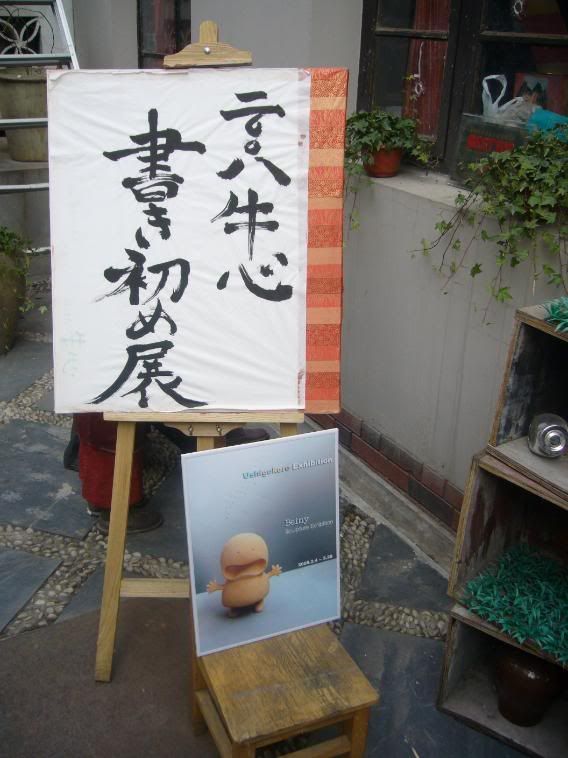
I ordered a plate of sphatti with minced beef and the price is quite steep. It costs me 48RMB for that plate of sphatti and I have enjoyed the meal given the good ambiance of the place.

Besides the restaurant, a well-decorated garden with a Japanese board caught our attention. It is a small gift shop but i believe it is run by Japanese. The shop is filled with small little boxes. It shared the concept of Pandora Box in
Wei Yi, like other women, was happily looking for her apparels and accessories in the store.
You can access my other China photos at this link.
Friday, February 8, 2008
My Nanjing Trip
I spent my first Chinese New Year overseas at Nanjing, China. Fortunately, I have a friend in Nanjing who can bring me around some of the Nanjing renowned places for the next few days. I took some photos and videos when I was on the trip to 中山陵 and 灵谷塔. Both places signify the sacrifices made for KMT (国民党).
Picture of 灵谷塔
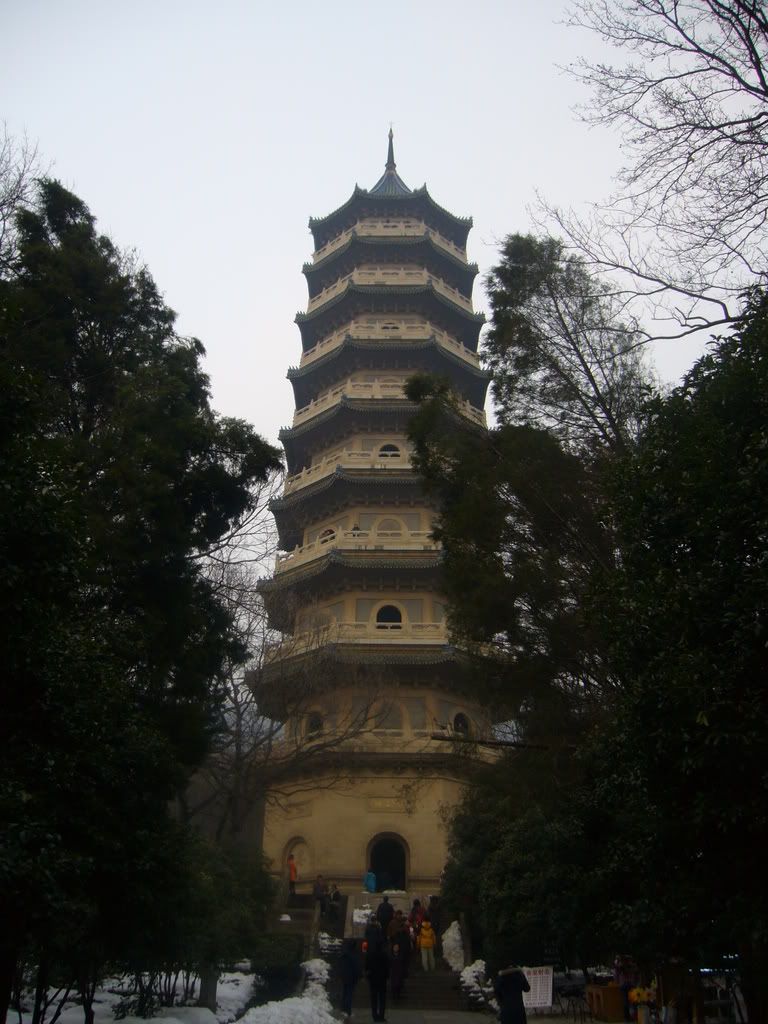
Video I took on the top of the 灵谷塔
Picture of 孙中上’s tomb at 中山陵

Picture of 灵谷塔
Video I took on the top of the 灵谷塔
Picture of 孙中上’s tomb at 中山陵
Wednesday, February 6, 2008
CNY Fireworks for 4 hours!
Firework in Shanghai for 4 hours in Chinese New Year Eve! I took a short clip from my Shanghai home.
Subscribe to:
Posts (Atom)


